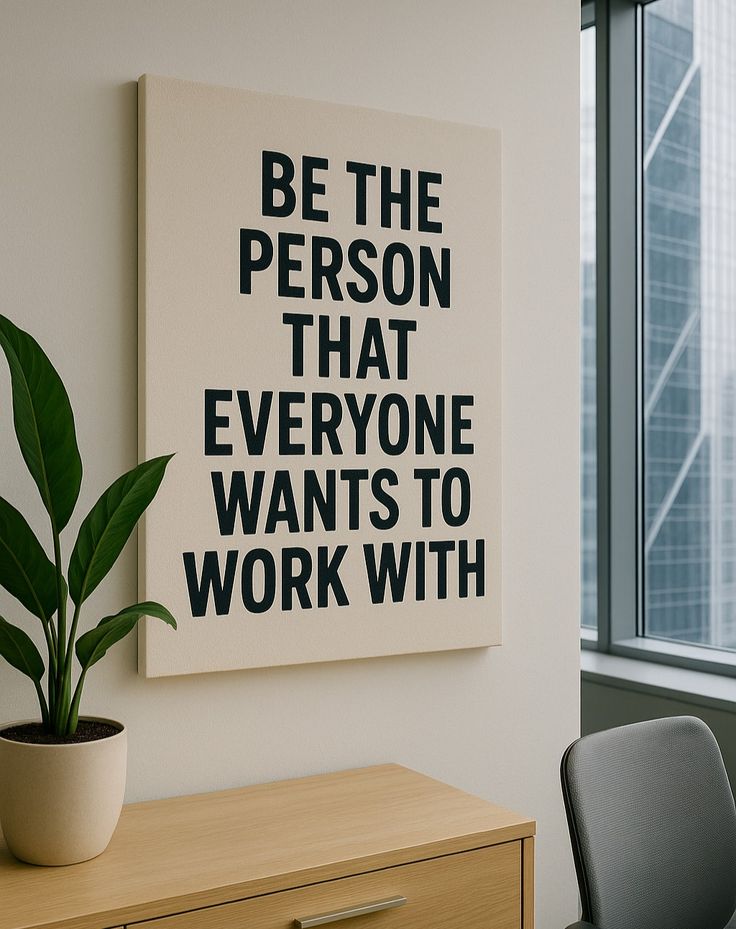
Excellence: The bare minimum you can give your employer
What makes you stand out as a person?
Have you ever thought about it?
There is something interesting about the workplace, you can be very good at your actual job and still be a terrible person to work with. You can be brilliant at what you do and still be the person everyone is afraid to put on a team.
You can have the qualifications, the experience, the impressive CV, the right job title and somehow, the first thing people say when your name comes up is, “Hmm… working with that person was something else.”
At some point in our careers, most of us will become senior colleagues to other people.
Someone will have to work with us. Someone will have to depend on us to finish our part of a project before they can do theirs and these little interactions become your reputation.
Not the one written on your CV. The one people actually experience.
I remember hearing someone say that you should work in such a way that when your name comes up in a room you're not in, people have good things to say about you.
I've thought about that a lot.
Imagine leaving a workplace and the only thing people remember about you is that you occupied a position there.
“She was just the team lead.”
“He was an intern.”
“She worked in HR.”
Okay, but what was it like working with you?
Were you dependable?
Did people have to chase you for everything?
Did you communicate when something went wrong, or did you disappear and hope the problem would sort itself out?
Could your colleagues trust you with something without checking every five minutes?
Were you respectful to people who couldn't do anything for your career?
Could you receive correction without turning it into a personal attack?
These things don't always make it into your performance review.
But people notice them.
And sometimes, I think we underestimate how much our everyday behaviour at work says about us.
Good work ethic isn't necessarily about being the person who is constantly doing the most. It isn't about staying late every day or making your entire personality about your job.
If you make a mistake, own it.
If someone helps you, acknowledge it.
If you are working with other people, remember that their time matters too.
When you are given the opportunity to do something well, don't deliberately do a mediocre job simply because nobody will catch you.
Of course, there are bad workplaces. There are employers who underpay people, exploit them and expect unreasonable things because “that's how work is.”
Having a good work ethic doesn't mean accepting nonsense.
You can have boundaries and still be dependable.
You can know your worth and still do good work excellently.
In fact, I think those things should be able to exist together.
Because your employer is not the only person building a reputation at work, You are too.
And when you eventually leave that job, the work will probably be handed over to someone else. The laptop will be returned. Your name will disappear from the email signature. Someone else will sit at your desk.
But the people you worked with will remember what it was like to work with you.
So yes, learn the skill.
Build the portfolio.
Get the experience.
Chase the opportunities.
But while you're doing all of that, don't forget to become someone people are glad they worked with.
Because sometimes, the next opportunity doesn't come from the work you submitted.
It comes from someone saying, “I know her. She'll do a good job.”
solveX is a product studio building digital tools for African and diaspora communities across Nigeria and the UK